


Our Mission
We aim to quantify the Green Gap by rigorously examining the relationship between consumers’ pro-sustainability attitudes and their actual organic purchasing behavior across countries.
Advance reproducible research
To generate reliable, transparent, and reproducible findings that can be confidently used by policymakers and the scientific community.
Leverage big team science
To systematically examine how different analytical decisions (“degrees of freedom”) influence research outcomes.
Strengthen methodological rigor
To promote the adoption of meta-scientific approaches in marketing research, improving robustness and credibility of empirical results.
Foster collaborative, transparent science
To enable coordinated collaboration among diverse research teams under standardized procedures, ensuring comparability and openness in scientific inquiry.
Status Update
Call for Participation
Call Closed
Context
This research project builds on a collaboration with the International Journal of Research in Marketing and AiMark, a non-profit institution promoting the use of consumer/household/scanner data in enhancing our understanding of marketing and its effectiveness. IJRM has agreed to publish one or more multi-author papers if they pass the dedicated review process for this project.
Although consumers increasingly express concern for environmental sustainability and indicate a willingness to engage in sustainable consumption, these attitudes do not consistently translate into actual purchasing behavior. This discrepancy is commonly referred to as the “green gap”.
Understanding the gap between sustainable intentions and realized behavior is of substantial societal relevance. Reliable, reproducible, and robust findings are essential for enabling policymakers to make informed decisions based on scientific evidence.
The objective of this research project is to conceptualize and quantify the green gap by examining the relationship between pro-sustainability attitudes and actual sustainable consumption behavior.
- Conceptual RQ: How can we conceptually link consumers’ actual purchases of organic products with their attitude towards sustainable consumption?
- Empirical RQ: What is the average marginal effect (in percentage points) of a one-standard deviation increase in consumers’ pro-sustainability attitude on their organic purchase share in each country?
The replicability and credibility crisis has raised concerns about the robustness of scientific findings across multiple disciplines (Auspurg & Brüderl, 2021; Malich & Rehmann-Sutter, 2022; Peterson & Panofsky, 2023).
Big team science offers a promising approach to address these concerns by systematically investigating how researchers’ analytical decisions—often referred to as “degrees of freedom”—affect research outcomes (Wicherts et al., 2016).
Despite its relevance, the marketing discipline has not yet fully leveraged metascientific approaches to improve reproducibility. This research program aims to address this gap by systematically examining how different analytical choices influence conclusions about the green gap.
The project utilizes an anonymized household panel dataset provided by YouGov. The dataset includes aggregated household-level information on take-home food purchases
- Total value and volume
- Total organic value and volume
- Total Private Label value and volume
- Total Private Label organic value and volume
- Responses to 16 statements related to sustainable consumption (e.g., “When shopping, I pay attention to products made from natural ingredients”), measured on varying scales (yes/no, 5-point Likert scales).
The dataset includes this information for more than 40,000 households in five countries for the years 2023 and 2024.
Participating teams are asked to document the results of their analyses using a provided template and to submit an annotated data analysis script which allows rerunning the syntax.
To participate, research teams must meet the following criteria:
- All research team members must have an active affiliation with a university or research institution.
- At least one team member holds a PhD in business administration, psychology, or a related field.
- Research teams consist of a minimum of three and a maximum of four researchers.
- Each researcher may participate in only one team.
- Teams agree to be available for interviews with the organizing team.
- Teams agree to a potential pre-registration submission.
- Teams agree to complete brief pre- and post-study surveys.
A multiple-blind procedure will be applied. Participating researchers and project investigators are not permitted to disclose any information related to their analyses or the project to other researchers until all submissions have been completed and the project has officially concluded.
All researchers who submit results in accordance with the project guidelines will be listed as co-authors on the initial publication.
Timeline
FAQ
Get answers to our most commonly asked questions.
General
This project is coordinated by an interdisciplinary team of marketing and consumer research scholars:
- Karin Teichmann, University of Innsbruck
- Oliver Koll, University of Innsbruck
- Jenny van Doorn, University of Groningen
- Nicola Stokburger-Sauer, University of Innsbruck
- Bernd Reitsamer, University of Innsbruck
- Verena Wieser, University of Innsbruck
- Katharina Baden, University of Innsbruck
- Constant Pieters, Copenhagen Business School
The coordination team is responsible for study design, data collection, randomization procedures, and synthesis of results.
The project is open to the international scientific research community.
To participate, at least one member of each research team must have an active affiliation with a university or research institution or be enrolled as a PhD student.
Participating research teams are required to:
- Analyze the provided dataset independently
- Address the predefined study questions
- Submit a complete description of their conceptualization, analytical strategy, and results using a provided template
- Provide fully reproducible code used for all analyses
- Comply with the project’s multiple-blind and non-collaboration rules
Research teams will be asked to complete brief pre- and post-study surveys. Some research teams will additionally be asked to submit a pre-registration of their research plan and/or to participate in interviews, as specified in the study plan.
All research teams answer the same two core questions:
- How can we conceptually link consumers’ actual purchases of organic products with their attitude towards sustainable consumption?
- What is the average marginal effect (in percentage points) of a one-standard deviation increase in consumers’ pro-sustainability attitude on their organic purchase share in each country?
Teams are free to choose their conceptual definitions, statistical models, and estimation strategies, within the provided data constraints.
We aim to recruit approximately 140 research teams, anticipating a dropout rate of about 30%, resulting in around 100 active teams contributing final analyses.
No. To ensure independence of analytical decisions, research teams must work fully independently and are not allowed to discuss analyses, interim results, or methodological choices with members of other teams.
Yes. Participation requires the ability to work with complex observational data and to conduct quantitative statistical analyses relevant to consumer behavior and marketing research.
Yes. All teams must submit the complete analysis code used to generate their results (e.g., R, Python, Stata, SPSS, Matlab). Code transparency and reproducibility are central to the project.
Yes. The project has been reviewed and approved by the ethics review board of the University of Innsbruck.
Questions can be directed to the project coordination team via the official project contact email or directly to the coordinators.
By participating, you contribute to:
- Advancing knowledge on the robustness and variability of evidence on sustainable consumption
- Improving understanding of researcher’s degrees of freedom and biases
- Developing best practices for many-analyst and open science research designs
All research teams that successfully complete the study requirements will be listed as co-authors on the resulting scientific publication.
The manuscript will be submitted to a leading peer-reviewed journal and will undergo the standard review process.
Data
The project uses a dataset combining:
- Total volume and value of purchases across food categories, with splits showing the volume and value of organic and Private Label purchases
- Survey-based measures of attitudes toward sustainable consumption
The dataset is centrally curated and provided to all participating research teams to ensure that all analyses are conducted based on the same empirical material.
No. The dataset is provided exclusively for use within the Green Gap Project.
- Participants may only use the data to address the predefined research questions
- The coordination team will archive the dataset for verification and replication purposes
- Research teams must delete all local copies of the data after submitting their final
- Any additional use of the data beyond this project is strictly prohibited.
The dataset includes consumer purchase and survey data from five European countries: Germany, Italy, Netherlands, Poland, and Romania.
The empirical focus of the project is the green gap, defined as the relationship between:
- Consumers’ attitudes toward sustainable consumption, and
- Their actual purchasing behavior, operationalized through observed purchases of organic products
The data allow teams to link attitudinal measures to real-world consumer behavior at the individual level.
The primary behavioral outcome is consumers’ actual organic purchasing behavior, typically operationalized as:
- the share of organic products in total purchases, or
- related transformations derived from observed purchase records
Research teams may propose alternative operationalizations, provided they are theoretically justified and clearly documented.
The dataset contains standardized measures capturing attitudes toward sustainable consumption. Teams are free to:
- Select specific items or scales
- Combine measures into indices
- Apply data transformations or re-scaling
All choices must be reported transparently and reproducibly.
The raw data are provided at the individual household level.
All teams are required to estimate the average marginal effect (percentage points) of a one-standard deviation increase in consumers’ pro-sustainability attitudes on their organic purchase share for each of five countries.
The precise functional form, statistical model, and estimation strategy are chosen by each team, subject to the constraints of the provided data.
Yes. Bayesian approaches are explicitly allowed. If you use Bayesian estimation, please report:
- The posterior mean (as the point estimate)
- The posterior standard deviation (as an analogue to the standard error)
- An interpretable Bayesian analogue to a p-value (e.g., posterior mass on the opposite side of zero)
Allowing teams to make independent choices regarding:
- Conceptualization
- Variable construction
- Statistical modeling
- Estimation techniques
is a core feature of the project, enabling systematic examination of researchers’ degrees of freedom, analytical variability, and potential biases in green gap research.
Timeline, Tasks & Submissions
The timeline (subject to change) is as follows:
- July 31, 2026: Deadline for research team registration
- September 25, 2026: NDA submission deadline
- October 1, 2026: Notification of acceptance and pre-study survey
- October 19, 2026: Distribution of study materials
- November 30, 2026: Deadline for (optional) pre-registration
- February 28, 2027: Deadline for submission of analyses, results, and replication materials
- June 30, 2027: Potential interviews with RT members.
- Second half of 2027: Coordination team synthesizes results and prepares a draft manuscript with all contributing teams listed as co-authors
- Thereafter: Submission of the manuscript to a peer-reviewed academic journal (subject to the standard review process)
The required time depends on the team’s experience, modeling choices, and analytical depth. As a rough guideline, participating teams should expect to spend approximately 20–40 hours on the project.
Once accepted, research teams will receive the agreement by email. The document can be signed electronically and must be returned before data access is granted.
For administrative and ethical compliance, participants may be asked to provide a copy of a valid passport or official ID. How do I access the data?
After the signed agreement is received, teams will be provided with:
- A link to a short questionnaire
- Access to the data repository and detailed documentation
Data access may depend on the team’s assigned experimental condition (e.g., preregistration vs. immediate access).
Each team will receive an email with an upload link that asks you to upload different files into a single folder labelled with your team ID.
- Estimates and model specification (see template_model.xls)
- A replication package (zipped), consisting of (a) all code used to process the data and generate the final estimates with detailed comments, and (b) a README with instructions on how to run your code, the order in which the scripts should be executed, and any required software packages. For instructions on creating your replication package, please see https://datacodestandard.org.
Additional information:
– Data (steps 1-6): Please follow all steps. You can skip steps 1, 5, and 6 if they concern the original data you received from us. For all other data used, please cover all steps to the best of your ability.
– Code (steps 7-9): Please follow all steps to the best of your ability.
– Supporting materials (steps 10-13): Please skip steps 10-11 (survey instruments and ethics). Step 12 (pre-registration) is optional. Please include a readme (step 13, following the readme template available at https://social-science-data-editors.github.io/template_README/ in a format of your choice).
– Sharing (steps 14-16): Skip steps 14-16. Instead, share your replication package with us.
(3. Optional: any other material you want to share: zipped file addl_material)
All submitted analyses, estimates, and survey responses are treated confidentially during the analysis phase.
In project reporting, individual results cannot be traced back to specific research teams.
To enhance research quality, team estimates and methodology will be published in a pseudonymized format on the website.
Coordinators
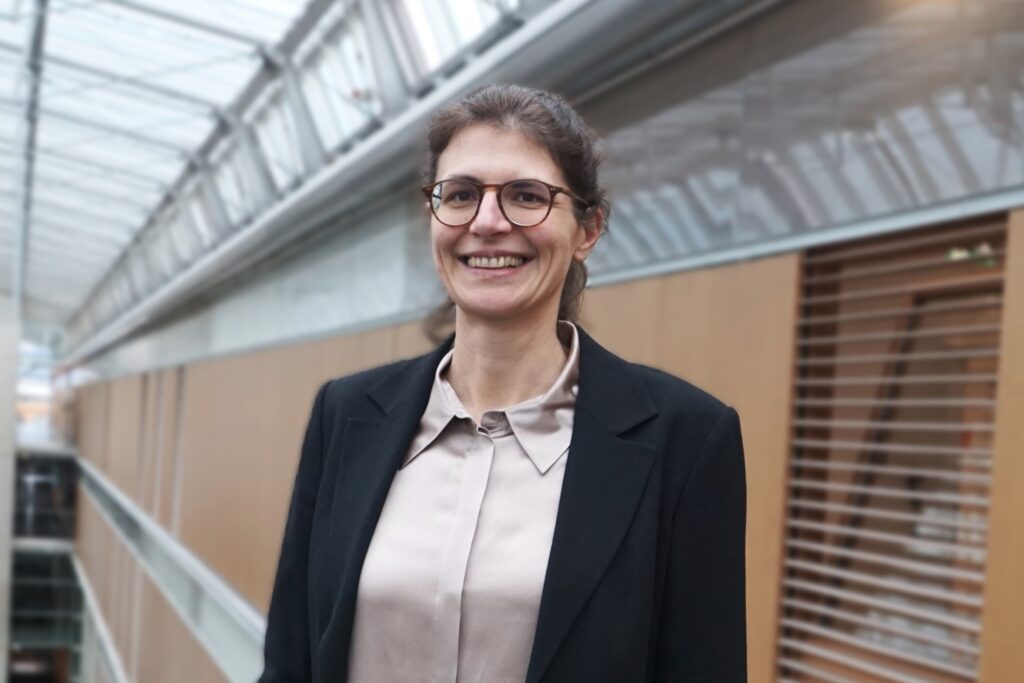
Karin Teichmann

Oliver Koll

Jenny van Doorn

Nicola Stokburger-Sauer

Bernd Reitsamer

Verena Wieser

Katharina Baden

Constant Pieters
Registration
Registration is now closed.
We have reached our target of 150 research teams, and registration has therefore closed ahead of schedule.
Thank you for your interest in the Green Gap Project.
Privacy | Terms of Use